OnePlus Ace 7 vs Samsung Galaxy Z Fold8 Ultra
Key differences
- OnePlus Ace 7 has the bigger battery: 9,000 mAh against 5,000 mAh.
- OnePlus Ace 7 charges faster over a cable: 100W against 45W.
- OnePlus Ace 7 has the smoother screen: 3840Hz against 120Hz.
- Samsung Galaxy Z Fold8 Ultra's screen gets brighter: 3,000 nits peak against 2,000.
- Samsung Galaxy Z Fold8 Ultra has the larger display: 8" against 6.78".
- OnePlus Ace 7 has the higher-resolution selfie camera: 16MP against 10MP.
- Samsung Galaxy Z Fold8 Ultra comes with up to 1TB of storage, against 512GB.
- Only the Samsung Galaxy Z Fold8 Ultra charges wirelessly (20W).
- The OnePlus Ace 7 is rated IP68 for dust and water, the Samsung Galaxy Z Fold8 Ultra IP48.
- The OnePlus Ace 7 is the newer phone: announced Oct 2026, against Jul 2026.
Worked out from the two spec sheets below, not from hands-on testing.
Benchmark matrix
Each axis is scaled against the best value in this comparison; the further out, the better.
2 devices selected
 OnePlus
Ace 7 |
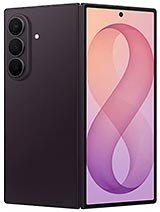 Samsung
Galaxy Z Fold8 Ultra |
|
|---|---|---|
| At a glance | ||
| Display | ||
| Display | 6.78" LTPO AMOLED185Hz · 2,000 nits | 8.0" Foldable Dynamic LTPO AMOLED 2X120Hz · 3,000 nits |
| Chipset | ||
| Chipset | Snapdragon 8 Elite Gen 5 V Series3 nm | Snapdragon 8 Elite Gen 53 nm |
| Camera | ||
| Camera | 200MP + 8MPOIS · 16MP selfie | 200MP + 10MP + 50MPOIS · 10MP selfie |
| Battery | ||
| Battery | 9,000 mAh100W wired | 5,000 mAh45W wired · 20W wireless |
| Memory | ||
| Memory | 12–16GB RAM256–512GB storage | 12–16GB RAM256GB–1TB storage |
| Software | ||
| Software | Android 17IP68 · 217 g | Android 17IP48 · 215 g |
| Display | ||
| Panel | ||
| Panel | LTPO AMOLED, 1B colors | Foldable Dynamic LTPO AMOLED 2X |
| Refresh rate | ||
| Refresh rate | 185Hz, 3840Hz PWM | 120Hz |
| HDR | ||
| HDR | HDR10+, HDR Vivid | HDR10+ |
| Brightness | ||
| Brightness | 1000 nits (HBM), 2000 nits (peak) | 3000 nits (peak) |
| Size | ||
| Size | 6.78 inches | 8.0 inches |
| Screen-to-body | ||
| Screen-to-body | ~89.5% | ~90.1% |
| Resolution | ||
| Resolution | 1272 × 2772 pixels (19.5:9) | 2256 × 2504 pixels |
| Pixel density | ||
| Pixel density | ~450 ppi | ~422 ppi |
| Protection | ||
| Protection | Crystal Shield Glass | Mohs level 1 |
| Other | ||
| Other | — | Anti-reflective coating Flex Titanium technology Cover display: Dynamic LTPO AMOLED 2X, 120Hz, Corning Gorilla Glass Ceramic 3 6.5 inches, 1080 x 2520 pixels, 422 ppi |
| Performance | ||
| Chipset | ||
| Chipset | Qualcomm SM8850-1-AB Snapdragon 8 Elite Gen 5 V Series | Qualcomm SM8850-1-AD Snapdragon 8 Elite Gen 5 |
| Process | ||
| Process | 3 nm | 3 nm |
| CPU | ||
| CPU | Octa-core 2 × 4.6 GHz Oryon V3 Phoenix L 6 × 3.62 GHz Oryon V3 Phoenix M | Octa-core 2 × 4.74 GHz Oryon V3 Phoenix L 6 × 3.62 GHz Oryon V3 Phoenix M |
| GPU | ||
| GPU | Adreno 840 | Adreno 840 (1.3GHz) |
| Memory card | ||
| Memory card | No | No |
| RAM and storage | ||
| RAM and storage | 12GB RAM + 256GB 16GB RAM + 256GB 12GB RAM + 512GB 16GB RAM + 512GB | 12GB RAM + 256GB 12GB RAM + 512GB 16GB RAM + 512GB 16GB RAM + 1TB |
| Storage type | ||
| Storage type | UFS 4.1 | UFS 4.x |
| Rear camera | ||
| Main | ||
| Main | 200 MP, f/1.8, 23mm, 1/1.56", 0.5µm, PDAF, OIS | 200 MP, f/1.7, 24mm, 1/1.3", 0.6µm, multi-directional PDAF, OIS |
| Telephoto | ||
| Telephoto | — | 10 MP, f/2.4, 67mm, 1/3.94", 1.0µm, PDAF, OIS, 3x optical zoom |
| Ultrawide | ||
| Ultrawide | 8 MP, f/2.2, 16mm, 112˚, 1/4.0", 1.12µm | 50 MP, f/1.9, 120˚, 1/2.5", 0.7µm, multi-directional PDAF |
| Features | ||
| Features | Color spectrum sensor, LED flash, HDR, panorama | LED flash, HDR, panorama |
| Video | ||
| Video | 8K@30fps, 4K@30/60/120fps, 1080p@30/60/120/240fps, gyro-EIS, OIS | 8K@30fps, 4K@30/60/120fps, 1080p@30/60/120/240fps, 10-bit HDR, HDR10+, gyro-EIS, OIS |
| Front camera | ||
| Ultrawide | ||
| Ultrawide | — | 10 MP, f/2.2, 18mm, 1/3.52", 1.12µm |
| Selfie | ||
| Selfie | 16 MP, f/2.4, 23mm, 1/3", 1.0µm | Cover camera: 10 MP, f/2.2, 24mm, 1/3.52", 1.12µm |
| Features | ||
| Features | Panorama | HDR |
| Video | ||
| Video | 1080p@30fps, gyro-EIS | 4K@30/60fps, 1080p@30/60fps, gyro-EIS |
| Battery | ||
| Capacity | ||
| Capacity | Si/C Li-Ion 9,000 mAh | Si/C Li-Ion 5,000 mAh |
| Charging | ||
| Charging | 100W wired, 44W/100W UFCS, 55W PPS, 18W PD/QC, 58% in 30 min Bypass charging | 45W wired, PD3.0, QC2.0, 67% in 30 min 20W wireless (Qi2.2) 4.5W reverse wireless |
| Design and build | ||
| Dimensions | ||
| Dimensions | 162.3 × 77.4 × 8.5 mm | Unfolded: 158.4 × 143.2 × 4.1 mm Folded: 158.4 × 72.8 × 8.9 mm |
| Weight | ||
| Weight | 217 g or 223 g | 215 g |
| Build | ||
| Build | Glass front (Crystal Shield Glass), aluminum frame, glass back or glass-fiber reinforced plastic back | Glass front (Gorilla Glass Victus Ceramic 3) (folded), plastic front (unfolded), glass back (Gorilla Glass Victus 2), aluminum frame |
| SIM | ||
| SIM | Nano-SIM + Nano-SIM | Nano-SIM + eSIM + eSIM (max 2 at a time) |
| Durability | ||
| Durability | IP68/IP69K dust tight and water resistant (high pressure water jets; immersible up to 1.5m for 30 min) Built-in cooling fan | IP48 dust and water resistant (dust > 1mm; immersible up to 1.5m for 30 min) Advanced Armor Aluminum |
| Colours | ||
| Colours | Black, White, Purple | Graphite, Cream, Violet Shadow |
| Software and sensors | ||
| OS | ||
| OS | Android 17, ColorOS 17 | Android 17, up to 7 major OS updates, One UI 9 |
| Sensors | ||
| Sensors | Fingerprint (under display, ultrasonic), accelerometer, gyro, proximity, compass | Fingerprint (side-mounted), accelerometer, gyro, proximity, compass, barometer |
| Other | ||
| Other | — | Samsung DeX (desktop experience support) Ultra Wideband (UWB) support |
| Audio | ||
| Speakers | ||
| Speakers | Stereo speakers | Stereo speakers |
| Headphone jack | ||
| Headphone jack | No | No |
| Other | ||
| Other | — | High-bitrate audio support |
| Connectivity | ||
| Wi-Fi | ||
| Wi-Fi | Wi-Fi 802.11 a/b/g/n/ac/6/7, dual-band | Wi-Fi 802.11 a/b/g/n/ac/6e/7, tri-band, Wi-Fi Direct |
| Bluetooth | ||
| Bluetooth | 5.4, A2DP, LE, aptX HD, aptX Adaptive, LHDC 5 | 6.0, A2DP, LE, aptX HD |
| Navigation | ||
| Navigation | GPS (L1+L2+L5), GLONASS (G1), BDS (B1I+B1c+B2a), GALILEO (E1+E5a), QZSS (L1+L5) | GPS, GALILEO, GLONASS, BDS, QZSS |
| NFC | ||
| NFC | Yes | Yes |
| IR blaster | ||
| IR blaster | Yes | — |
| FM radio | ||
| FM radio | No | No |
| USB | ||
| USB | USB Type-C 2.0 | USB Type-C 3.2, OTG |
| Technology | ||
| Technology | GSM / HSPA / LTE / 5G | GSM / HSPA / LTE / 5G |
| 2G bands | ||
| 2G bands | GSM 850 / 900 / 1800 / 1900 | GSM 850 / 900 / 1800 / 1900 |
| 3G bands | ||
| 3G bands | HSDPA 850 / 900 / 2100 | HSDPA 850 / 900 / 1700(AWS) / 1900 / 2100 |
| 4G bands | ||
| 4G bands | 1, 3, 4, 5, 7, 8, 18, 19, 26, 28, 34, 38, 39, 40, 41, 42, 43, 48, 66 | 1, 2, 3, 4, 5, 7, 8, 12, 13, 17, 18, 19, 20, 25, 26, 28, 38, 39, 40, 41, 66 - International 1, 2, 3, 4, 5, 7, 8, 12, 13, 14, 18, 19, 20, 25, 26, 28, 29, 30, 38, 39, 40, 41, 48, 66, 71 - USA |
| 5G bands | ||
| 5G bands | 1, 3, 5, 8, 18, 26, 28, 34, 38, 39, 40, 41, 48, 66, 77, 78 SA/NSA | 1, 2, 3, 5, 7, 8, 12, 20, 25, 26, 28, 38, 40, 41, 66, 77, 78 SA/NSA/Sub6 - International 1, 2, 3, 5, 7, 8, 12, 20, 25, 28, 38, 41, 66, 71, 77, 78, 257, 258, 260, 261 SA/NSA/Sub6/mmWave - USA |
| Speed | ||
| Speed | HSPA, LTE, 5G | HSPA, LTE, 5G |
| Lab test results | ||
| Performance | ||
| Performance | — | AnTuTu: 2160310 (v10), 2970196 (v11) GeekBench: 11124 (v6) 3DMark: 6772 (Wild Life Extreme) |
| Display | ||
| Display | — | 1432 nits max brightness (measured) |
| Loudspeaker | ||
| Loudspeaker | — | -29.3 LUFS (Average) |
| Battery | ||
| Battery | — | Active use score 13:06h |
| EU energy label | ||
| Energy | ||
| Energy | — | Class A |
| Battery | ||
| Battery | — | 51:10h endurance, 1200 cycles |
| Free fall | ||
| Free fall | — | Class A (210 falls) |
| Repairability | ||
| Repairability | — | Class C |
| Launch and models | ||
| Announced | ||
| Announced | 29 October 2026 | 22 July 2026 |
| Status | ||
| Status | Available. Released 29 October 2026 | Available. Released 22 July 2026 |
| Model numbers | ||
| Model numbers | PYF110 | SM-F976B, SM-F976B/DS, SM-F976U, SM-F976U1 |
| SAR | ||
| SAR | — | 1.10 W/kg (head) 1.25 W/kg (body) |
| SAR EU | ||
| SAR EU | — | 0.82 W/kg (head) 1.17 W/kg (body) |