Nothing Phone (4a) vs Xiaomi Redmi Note 15 Pro+
Key differences
- Both run on the same chipset, the Snapdragon 7s Gen 4.
- Xiaomi Redmi Note 15 Pro+ has the bigger battery: 6,500 mAh against 5,080 mAh.
- Xiaomi Redmi Note 15 Pro+ charges faster over a cable: 100W against 50W.
- Xiaomi Redmi Note 15 Pro+ has the smoother screen: 3840Hz against 2160Hz.
- Nothing Phone (4a)'s screen gets brighter: 4,500 nits peak against 3,200.
- Xiaomi Redmi Note 15 Pro+ has the higher-resolution main camera: 200MP against 50MP.
- Xiaomi Redmi Note 15 Pro+ comes with up to 512GB of storage, against 256GB.
- The Nothing Phone (4a) is rated IP64 for dust and water, the Xiaomi Redmi Note 15 Pro+ IP68.
- The Nothing Phone (4a) is the newer phone: announced Mar 2026, against Dec 2025.
Worked out from the two spec sheets below, not from hands-on testing.
Benchmark matrix
Each axis is scaled against the best value in this comparison; the further out, the better.
2 devices selected
 Nothing
Phone (4a) |
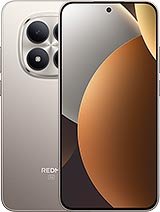 Xiaomi
Redmi Note 15 Pro+ |
|
|---|---|---|
| At a glance | ||
| Display | ||
| Display | 6.78" AMOLED120Hz · 4,500 nits | 6.83" AMOLED120Hz · 3,200 nits |
| Chipset | ||
| Chipset | Snapdragon 7s Gen 44 nm | Snapdragon 7s Gen 44 nm |
| Camera | ||
| Camera | 50MP + 50MP + 8MPOIS · 32MP selfie | 200MP + 8MPOIS · 32MP selfie |
| Battery | ||
| Battery | 5,080 mAh50W wired | 6,500 mAh100W wired |
| Memory | ||
| Memory | 8–12GB RAM128–256GB storage | 8–12GB RAM256–512GB storage |
| Software | ||
| Software | Android 16IP64 · 204.5 g | Android 15IP68 · 207 g |
| Display | ||
| Panel | ||
| Panel | AMOLED, 1B colors | AMOLED, 68B colors |
| Refresh rate | ||
| Refresh rate | 120Hz, 2160Hz PWM | 120Hz, 3840Hz PWM |
| HDR | ||
| HDR | HDR10+ | HDR10+, Dolby Vision |
| Brightness | ||
| Brightness | 800 nits (typ), 1600 nits (HBM), 4500 nits (peak) | 3200 nits (peak) |
| Size | ||
| Size | 6.78 inches | 6.83 inches |
| Screen-to-body | ||
| Screen-to-body | ~87.2% | ~89.6% |
| Resolution | ||
| Resolution | 1224 × 2720 pixels (20:9) | 1280 × 2772 pixels (19.5:9) |
| Pixel density | ||
| Pixel density | ~440 ppi | ~447 ppi |
| Protection | ||
| Protection | Corning Gorilla Glass 7i, Mohs level 5 | Corning Gorilla Glass Victus 2, Mohs level 5 |
| Other | ||
| Other | Ultra HDR image support | — |
| Performance | ||
| Chipset | ||
| Chipset | Qualcomm SM7635-AC Snapdragon 7s Gen 4 | Qualcomm SM7635-AC Snapdragon 7s Gen 4 |
| Process | ||
| Process | 4 nm | 4 nm |
| CPU | ||
| CPU | Octa-core 1 × 2.7 GHz Cortex-A720 3 × 2.4 GHz Cortex-A720 4 × 1.8 GHz Cortex-A520 | Octa-core 1 × 2.7 GHz Cortex-A720 3 × 2.4 GHz Cortex-A720 4 × 1.8 GHz Cortex-A520 |
| GPU | ||
| GPU | Adreno 810 | Adreno 810 |
| Memory card | ||
| Memory card | No | No |
| RAM and storage | ||
| RAM and storage | 8GB RAM + 128GB 8GB RAM + 256GB 12GB RAM + 256GB | 8GB RAM + 256GB 12GB RAM + 256GB 12GB RAM + 512GB |
| Storage type | ||
| Storage type | UFS 3.1 | UFS 2.2 |
| Rear camera | ||
| Main | ||
| Main | 50 MP, f/1.9, 24mm, 1/1.57", 1.0µm, PDAF, OIS | 200 MP, f/1.7, 23mm, 1/1.4", 0.56µm, multi-directional PDAF, OIS |
| Periscope telephoto | ||
| Periscope telephoto | 50 MP, f/2.9, 80mm, 1/2.75", 0.64µm, PDAF, OIS, 3.5x optical zoom | — |
| Ultrawide | ||
| Ultrawide | 8 MP, f/2.2, 15mm, 120˚, 1/4.0", 1.12µm | 8 MP, f/2.2, 15mm, 120˚, 1/4.0", 1.12µm |
| Features | ||
| Features | LED flash, panorama, Ultra XDR | LED flash, HDR, panorama |
| Video | ||
| Video | 4K@30fps, 1080p@30/60/120fps, gyro-EIS, OIS, Dolby Vision HDR | 4K@30fps, 1080p@30/60/120fps, gyro-EIS, OIS |
| Front camera | ||
| Selfie | ||
| Selfie | 32 MP, f/2.2, 22mm, 1/3.42", 0.64µm | 32 MP, f/2.2, 1/3.0", 0.7µm |
| Features | ||
| Features | — | HDR, panorama |
| Video | ||
| Video | 1080p@30fps | 1080p@30/60fps |
| Battery | ||
| Capacity | ||
| Capacity | 5,080 mAh - International5400 mAh - India | Si/C Li-Ion 6,500 mAh |
| Charging | ||
| Charging | 50W wired, 50% in 22 min, 100% in 64 min 7.5W reverse wired | 100W wired, 100% in 40 min 22.5W reverse wired |
| Design and build | ||
| Dimensions | ||
| Dimensions | 164 × 77.6 × 8.6 mm | 163.3 × 78.3 × 8.2 mm or 8.5 mm |
| Weight | ||
| Weight | 204.5 g | 207 g |
| Build | ||
| Build | Glass front (Gorilla Glass 7i), plastic frame, glass back | Glass front (Gorilla Glass Victus 2), glass-fiber reinforced plastic back or silicone polymer back (eco leather) |
| SIM | ||
| SIM | Nano-SIM + Nano-SIM | · Nano-SIM + eSIM · Nano-SIM + Nano-SIM |
| Durability | ||
| Durability | IP64 dust tight and water resistant (water splashes) Manufacturer-rated water-resistant (up to 25cm for 20 min) Notification LED (on the back) | IP68/IP69K dust tight and water resistant (high pressure water jets; immersible up to 1.5m for 30 min) Manufacturer-rated water-resistance (up to 2m for 24 hours) Drop resistant up to 2.5m |
| Colours | ||
| Colours | Pink, White, Black, Blue | Glacier Blue, Mocha Brown, Black |
| Software and sensors | ||
| OS | ||
| OS | Android 16, Nothing OS 4.1, up to 3 major OS updates | Android 15, up to 4 major OS updates, HyperOS 2 |
| Sensors | ||
| Sensors | Fingerprint (under display, optical), accelerometer, gyro, proximity, compass | Fingerprint (under display, optical), accelerometer, gyro, compass, proximity |
| Audio | ||
| Speakers | ||
| Speakers | Stereo speakers | Stereo speakers (with Dolby Atmos) |
| Headphone jack | ||
| Headphone jack | No | No |
| Other | ||
| Other | — | 24-bit/192kHz Hi-Res & Hi-Res wireless audio |
| Connectivity | ||
| Wi-Fi | ||
| Wi-Fi | Wi-Fi 802.11 a/b/g/n/ac/6, dual-band, Wi-Fi Direct | Wi-Fi 802.11 a/b/g/n/ac/6/6e, dual-band, Wi-Fi Direct (/6e is market/region dependent) |
| Bluetooth | ||
| Bluetooth | 5.4, A2DP, LE | 5.4, A2DP, LE |
| Navigation | ||
| Navigation | GPS, GALILEO, GLONASS, BDS, QZSS | GPS (L1+L5), GALILEO, GLONASS, QZSS, BDS |
| NFC | ||
| NFC | Yes (market/region dependent) | Yes (market/region dependent) |
| IR blaster | ||
| IR blaster | — | Yes |
| FM radio | ||
| FM radio | No | No |
| USB | ||
| USB | USB Type-C 2.0, OTG | USB Type-C 2.0, OTG |
| Technology | ||
| Technology | GSM / HSPA / LTE / 5G | GSM / HSPA / LTE / 5G |
| 2G bands | ||
| 2G bands | GSM 850 / 900 / 1800 / 1900 | GSM 850 / 900 / 1800 / 1900 |
| 3G bands | ||
| 3G bands | HSDPA 850 / 900 / 1700(AWS) / 1900 / 2100 - International HSDPA 850 / 900 / 2100 - India | HSDPA 800 / 850 / 900 / 1700(AWS) / 1900 / 2100 |
| 4G bands | ||
| 4G bands | 1, 2, 3, 4, 5, 7, 8, 12, 17, 18, 19, 20, 26, 28, 38, 40, 41, 42, 48, 66, 71 - International 1, 3, 5, 8, 28, 38, 40, 41 - India | 1, 2, 3, 4, 5, 7, 8, 12, 13, 17, 18, 19, 20, 26, 28, 32, 38, 40, 41, 42, 48, 66, 71 |
| 5G bands | ||
| 5G bands | 1, 2, 3, 5, 7, 8, 12, 20, 28, 38, 40, 41, 48, 66, 77, 78 SA/NSA - International 1, 3, 5, 8, 28, 38, 40, 41, 77, 78 SA/NSA - India | 1, 2, 3, 5, 7, 8, 12, 20, 26, 28, 38, 40, 41, 48, 66, 71, 77, 78 SA/NSA |
| Speed | ||
| Speed | HSPA, LTE, 5G | HSPA, LTE, 5G |
| Lab test results | ||
| Performance | ||
| Performance | AnTuTu: 863305 (v10), 1183775 (v11) GeekBench: 3374 (v6) 3DMark: 1128 (Wild Life Extreme) | AnTuTu: 817755 (v10) GeekBench: 3060 (v6) 3DMark: 1111 (Wild Life Extreme) |
| Display | ||
| Display | 1549 nits max brightness (measured) | 1509 nits max brightness (measured) |
| Loudspeaker | ||
| Loudspeaker | -24.0 LUFS (Very good) | -20.1 LUFS (Excellent) |
| Battery | ||
| Battery | Active use score 13:34h | Active use score 16:04h |
| EU energy label | ||
| Energy | ||
| Energy | Class B | Class B |
| Battery | ||
| Battery | 51:27h endurance, 1400 cycles | 60:47h endurance, 1000 cycles |
| Free fall | ||
| Free fall | Class C (100 falls) | Class A (270 falls) |
| Repairability | ||
| Repairability | Class C | Class C |
| Launch and models | ||
| Announced | ||
| Announced | 05 March 2026 | 18 December 2025 |
| Status | ||
| Status | Available. Released 05 March 2026 | Available. Released 25 December 2025 |
| Model numbers | ||
| Model numbers | A069 | 2510ERA8BG |