Nothing Phone (3a) Pro vs Xiaomi Redmi Note 14 Pro+ 5G (India)
 Nothing
Phone (3a) Pro
Announced Mar 2025
VS
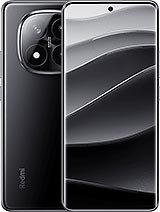 Xiaomi
Redmi Note 14 Pro+ 5G (India)
Announced Sep 2024
Key differences
- Both run on the same chipset, the Snapdragon 7s Gen 3.
- Xiaomi Redmi Note 14 Pro+ 5G (India) has the bigger battery: 6,200 mAh against 5,000 mAh.
- Xiaomi Redmi Note 14 Pro+ 5G (India) charges faster over a cable: 90W against 50W.
- Nothing Phone (3a) Pro has the larger display: 6.77" against 6.67".
- Nothing Phone (3a) Pro has the higher-resolution selfie camera: 50MP against 20MP.
- Xiaomi Redmi Note 14 Pro+ 5G (India) comes with up to 16GB of RAM, against 12GB.
- Xiaomi Redmi Note 14 Pro+ 5G (India) comes with up to 512GB of storage, against 256GB.
- The Nothing Phone (3a) Pro is rated IP64 for dust and water, the Xiaomi Redmi Note 14 Pro+ 5G (India) IP68/IP69.
- The Nothing Phone (3a) Pro is the newer phone: announced Mar 2025, against Sep 2024.
Worked out from the two spec sheets below, not from hands-on testing.
Benchmark matrix
Each axis is scaled against the best value in this comparison; the further out, the better.
2 devices selected
|
Nothing
Phone (3a) Pro
|
Xiaomi
Redmi Note 14 Pro+ 5G (India)
|
|
|---|---|---|
| At a glance | ||
| Display | ||
| Display | 6.77" AMOLED120Hz · 3,000 nits | 6.67" AMOLED120Hz · 3,000 nits |
| Chipset | ||
| Chipset | Snapdragon 7s Gen 34 nm | Snapdragon 7s Gen 34 nm |
| Camera | ||
| Camera | 50MP + 50MP + 8MPOIS · 50MP selfie | 50MP + 50MP + 8MPOIS · 20MP selfie |
| Battery | ||
| Battery | 5,000 mAh50W wired | 6,200 mAh90W wired |
| Memory | ||
| Memory | 8–12GB RAM128–256GB storage | 8–16GB RAM128–512GB storage |
| Software | ||
| Software | Android 15IP64 · 211 g | Android 14IP68/IP69 · 205 g |
| Display | ||
| Panel | ||
| Panel | AMOLED, 1B colors | AMOLED, 68B colors |
| Refresh rate | ||
| Refresh rate | 120Hz | 120Hz |
| HDR | ||
| HDR | HDR10+ | HDR10+, Dolby Vision |
| Brightness | ||
| Brightness | 800 nits (typ), 1300 nits (HBM), 3000 nits (peak) | 3000 nits (peak) |
| Size | ||
| Size | 6.77 inches | 6.67 inches |
| Screen-to-body | ||
| Screen-to-body | ~88.0% | ~88.5% |
| Resolution | ||
| Resolution | 1080 × 2392 pixels | 1220 × 2712 pixels (20:9) |
| Pixel density | ||
| Pixel density | ~387 ppi | ~446 ppi |
| Protection | ||
| Protection | Panda Glass | Corning Gorilla Glass Victus 2 |
| Other | ||
| Other | Ultra HDR image support | — |
| Performance | ||
| Chipset | ||
| Chipset | Qualcomm SM7635 Snapdragon 7s Gen 3 | Qualcomm SM7635 Snapdragon 7s Gen 3 |
| Process | ||
| Process | 4 nm | 4 nm |
| CPU | ||
| CPU | Octa-core 1 × 2.5 GHz Cortex-A720 3 × 2.4 GHz Cortex-A720 4 × 1.8 GHz Cortex-A520 | Octa-core 1 × 2.5 GHz Cortex-A720 3 × 2.4 GHz Cortex-A720 4 × 1.8 GHz Cortex-A520 |
| GPU | ||
| GPU | Adreno 710 (940 MHz) | Adreno 810 |
| Memory card | ||
| Memory card | No | No |
| RAM and storage | ||
| RAM and storage | 8GB RAM + 128GB 8GB RAM + 256GB 12GB RAM + 256GB | 8GB RAM + 128GB 8GB RAM + 256GB 12GB RAM + 256GB 12GB RAM + 512GB 16GB RAM + 512GB |
| Storage type | ||
| Storage type | — | UFS 2.2 or UFS 3.1 |
| Rear camera | ||
| Main | ||
| Main | 50 MP, f/1.9, 24mm, 1/1.56", 1.0µm, dual pixel PDAF, OIS | 50 MP, f/1.6, 24mm, 1/1.55", 1.0µm, PDAF, OIS |
| Telephoto | ||
| Telephoto | — | 50 MP, f/2.0, 60mm, 1/2.76", PDAF (50cm - ∞), 2.5x optical zoom |
| Periscope telephoto | ||
| Periscope telephoto | 50 MP, f/2.6, 70mm (15cm - ∞), 1/1.95", 0.8µm, PDAF, OIS, 3x optical zoom | — |
| Ultrawide | ||
| Ultrawide | 8 MP, f/2.2, 15mm, 120˚, 1/4.0", 1.12µm | 8 MP, f/2.2, 15mm, 120˚, 1/4.0", 1.12µm |
| Features | ||
| Features | LED flash, panorama, HDR | LED flash, HDR, panorama |
| Video | ||
| Video | 4K@30fps, 1080p@30/60/120fps, gyro-EIS, OIS | 4K@24/30fps, 1080p@30/60/120fps, gyro-EIS, OIS |
| Front camera | ||
| Selfie | ||
| Selfie | 50 MP, f/2.2, 24mm, 1/2.76" | 20 MP, f/2.2, 21mm, 1/4.0", 0.7µm |
| Features | ||
| Features | — | HDR, panorama |
| Video | ||
| Video | 4K@30fps, 1080p@30fps | 1080p@30/60fps |
| Battery | ||
| Capacity | ||
| Capacity | 5,000 mAh | Si/C Li-Ion 6,200 mAh |
| Charging | ||
| Charging | 50W wired, 50% in 19 min, 100% in 56 min | 90W wired, PD |
| Design and build | ||
| Dimensions | ||
| Dimensions | 163.5 × 77.5 × 8.4 mm | 162.5 × 74.7 × 8.8 mm |
| Weight | ||
| Weight | 211 g | 205 g or 210 g |
| Build | ||
| Build | Glass front (Panda Glass), plastic frame, glass back | Glass front (Gorilla Glass Victus 2), glass back (Gorrila Glass 7i) or silicone polymer back (eco leather) |
| SIM | ||
| SIM | Nano-SIM + Nano-SIM + eSIM (max 2 at a time) Nano-SIM + Nano-SIM - India only | · Nano-SIM + eSIM · Nano-SIM + Nano-SIM |
| Durability | ||
| Durability | IP64 dust tight and water resistant (water splashes) 3 LED light strips on the back (notifications, camera fill light, 26 addressable zones) | IP68/IP69 dust tight and water resistant (high pressure water jets; immersible up to 1.5m for 30 min) Manufacturer-rated water-resistance (up to 2m for 24 hours) IP69K (market/region dependent) |
| Colours | ||
| Colours | Black, Gray | Titan Black, Phantom Purple, Spectre Blue, White, Green |
| Software and sensors | ||
| OS | ||
| OS | Android 15, up to 3 major Android upgrades, Nothing OS 3.1 | Android 14, up to 3 major OS updates, HyperOS |
| Sensors | ||
| Sensors | Fingerprint (under display, optical), accelerometer, gyro, proximity, compass | Fingerprint (under display, optical), accelerometer, gyro, compass, proximity (ultrasonic) |
| Other | ||
| Other | Circle to Search | — |
| Audio | ||
| Speakers | ||
| Speakers | Stereo speakers | Stereo speakers |
| Headphone jack | ||
| Headphone jack | No | No |
| Other | ||
| Other | — | 24-bit/192kHz Hi-Res & Hi-Res wireless audio |
| Connectivity | ||
| Wi-Fi | ||
| Wi-Fi | Wi-Fi 802.11 a/b/g/n/ac/6, dual-band, Wi-Fi Direct | Wi-Fi 802.11 a/b/g/n/ac/6, dual-band, Wi-Fi Direct |
| Bluetooth | ||
| Bluetooth | 5.4, A2DP, LE | 5.4, A2DP, LE, LHDC |
| Navigation | ||
| Navigation | GPS, GALILEO, GLONASS, BDS, QZSS | GPS, GALILEO, GLONASS, QZSS, BDS (B1I+B1c) |
| NFC | ||
| NFC | Yes | Yes (market/region dependent) |
| IR blaster | ||
| IR blaster | — | Yes |
| FM radio | ||
| FM radio | No | Unspecified |
| USB | ||
| USB | USB Type-C 2.0, OTG | USB Type-C 2.0, OTG |
| Technology | ||
| Technology | GSM / HSPA / LTE / 5G | GSM / HSPA / LTE / 5G |
| 2G bands | ||
| 2G bands | GSM 850 / 900 / 1800 / 1900 | GSM 850 / 900 / 1800 / 1900 |
| 3G bands | ||
| 3G bands | HSDPA 800 / 850 / 900 / 1700(AWS) / 1900 / 2100 | HSDPA 850 / 900 / 2100 - India HSDPA 800 / 850 / 900 / 2100 - China |
| 4G bands | ||
| 4G bands | 1, 2, 3, 4, 5, 7, 8, 12, 17, 18, 19, 20, 26, 28, 38, 40, 41, 42, 48, 66 | 1, 3, 5, 8, 28, 38, 40, 41 - India 1, 3, 5, 8, 19, 28, 34, 38, 39, 40, 41, 42, 48 - China |
| 5G bands | ||
| 5G bands | 1, 2, 3, 5, 7, 8, 12, 20, 28, 38, 40, 41, 48, 66, 77, 78 SA/NSA | 1, 3, 5, 8, 28, 38, 40, 41, 77, 78 SA/NSA - India 1, 3, 5, 8, 28, 38, 40, 41, 48, 77, 78 SA/NSA - China |
| Speed | ||
| Speed | HSPA, LTE, 5G | HSPA, LTE, 5G |
| Lab test results | ||
| Performance | ||
| Performance | AnTuTu: 820097 (v10) GeekBench: 3327 (v6) 3DMark: 1061 (Wild Life Extreme) | — |
| Display | ||
| Display | 1307 nits max brightness (measured) | — |
| Loudspeaker | ||
| Loudspeaker | -23.3 LUFS (Very good) | — |
| Battery (new) | ||
| Battery (new) | Active use score 13:37h | — |
| Launch and models | ||
| Announced | ||
| Announced | 04 March 2025 | 26 September 2024 |
| Status | ||
| Status | Available. Released 25 March 2025 | Available. Released 26 September 2024 |
| Model numbers | ||
| Model numbers | A059P | 24115RA8EC, 24115RA8EI |
| SAR | ||
| SAR | — | 0.79 W/kg (head) 0.54 W/kg (body) |