Apple iPhone Air 2 vs Lava Smart 4 Pro
Key differences
- Apple iPhone Air 2 has the smoother screen: 120Hz against 90Hz.
- Lava Smart 4 Pro has the larger display: 6.75" against 6.5".
- Apple iPhone Air 2 has the higher-resolution main camera: 48MP against 13MP.
- Apple iPhone Air 2 has the higher-resolution selfie camera: 18MP against 5MP.
- Apple iPhone Air 2 comes with up to 12GB of RAM, against 4GB.
- Apple iPhone Air 2 comes with up to 1TB of storage, against 64GB.
- Only the Apple iPhone Air 2 lists an official dust and water rating (IP68).
Worked out from the two spec sheets below, not from hands-on testing.
Benchmark matrix
Each axis is scaled against the best value in this comparison; the further out, the better.
2 devices selected
 Apple
iPhone Air 2 |
 Lava
Smart 4 Pro |
|
|---|---|---|
| At a glance | ||
| Display | ||
| Display | 6.5" LTPO Super Retina XDR OLED120Hz · 3,000 nits | 6.75" IPS LCD90Hz |
| Chipset | ||
| Chipset | A20 Pro2 nm | Unisoc T610 (12 nm)Not rated yet |
| Camera | ||
| Camera | 48MP + 48MPOIS · 18MP selfie | 13MP5MP selfie |
| Battery | ||
| Battery | — | 7,000 mAh18W wired |
| Memory | ||
| Memory | 12GB RAM256GB–1TB storage | 4GB RAM64GB storage · microSD |
| Software | ||
| Software | iOS 27.xIP68 | Android 16 (Go edition) |
| Display | ||
| Panel | ||
| Panel | LTPO Super Retina XDR OLED | IPS LCD |
| Refresh rate | ||
| Refresh rate | 120Hz | 90Hz |
| HDR | ||
| HDR | HDR10, Dolby Vision | — |
| Brightness | ||
| Brightness | 1000 nits (typ), 1600 nits (HBM), 3000 nits (peak) | — |
| Size | ||
| Size | 6.5 inches | 6.75 inches |
| Screen-to-body | ||
| Screen-to-body | ~88.8% | — |
| Resolution | ||
| Resolution | 1260 × 2736 pixels (19.5:9) | 720 × 1600 pixels (20:9) |
| Pixel density | ||
| Pixel density | ~463 ppi | ~260 ppi |
| Protection | ||
| Protection | Ceramic Shield 2 | — |
| Other | ||
| Other | Anti-reflective coating | — |
| Performance | ||
| Chipset | ||
| Chipset | Apple A20 Pro | Unisoc T610 |
| Process | ||
| Process | 2 nm | 12 nm |
| CPU | ||
| CPU | Hexa-core 2 × 4.93 GHz 4 × 2.64 GHz | Octa-core 2 × 1.8 GHz Cortex-A75 6 × 1.8 GHz Cortex-A55 |
| GPU | ||
| GPU | Apple GPU (6-core graphics) | Mali-G52 MP2 |
| Memory card | ||
| Memory card | No | microSDXC (dedicated slot) |
| RAM and storage | ||
| RAM and storage | 12GB RAM + 256GB 12GB RAM + 512GB 12GB RAM + 1TB | 4GB RAM + 64GB |
| Storage type | ||
| Storage type | NVMe | — |
| Rear camera | ||
| Main | ||
| Main | 48 MP, f/1.6, 26mm, 1/1.56", 1.0µm, dual pixel PDAF, sensor-shift OIS | 13 MP |
| Ultrawide | ||
| Ultrawide | 48 MP, f/2.2, 13mm, 120˚, 1/2.55", 0.7µm, PDAF | — |
| Features | ||
| Features | Dual-LED dual-tone flash, HDR (photo/panorama) | LED flash |
| Video | ||
| Video | 4K@24/25/30/60fps, 1080p@25/30/60/120/240fps, HDR, Dolby Vision HDR (up to 60fps), stereo sound rec. | 1080p@30fps |
| Front camera | ||
| Selfie | ||
| Selfie | — | 5 MP |
| Ultrawide | ||
| Ultrawide | 18 MP multi-aspect, f/1.9, 20mm, PDAF | — |
| Depth/biometrics | ||
| Depth/biometrics | SL 3D | — |
| Features | ||
| Features | HDR, Dolby Vision HDR, 3D (spatial) audio, stereo sound rec. | — |
| Video | ||
| Video | 4K@24/25/30/60fps, 1080p@25/30/60/120fps, gyro-EIS | Yes |
| Battery | ||
| Capacity | ||
| Capacity | Larger battery than iPhone Air | 7,000 mAh |
| Charging | ||
| Charging | Wired, PD2.0, 50% in 30 min 20 wireless MagSafe/Qi2, 50% in 30 min (15W - China) 4.5W reverse wired | 18W wired |
| Design and build | ||
| Dimensions | ||
| Dimensions | 156.2 × 74.7 × 5.2 mm | - |
| Weight | ||
| Weight | - | - |
| Build | ||
| Build | Glass front (Ceramic Shield 2), titanium frame (grade 5), glass back (Ceramic Shield) | — |
| SIM | ||
| SIM | eSIM + eSIM (8 or more, max 2 at a time) | Nano-SIM + Nano-SIM |
| Durability | ||
| Durability | IP68 dust tight and water resistant (immersible up to 6m for 30 min) | — |
| Colours | ||
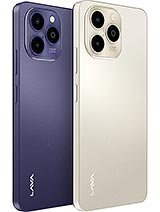
| Colours | Space Black, Cloud White, Sky Blue, Burgundy | Neelam Blue, Konark Gold |
| Software and sensors | ||
| OS | ||
| OS | iOS 27.x | Android 16 (Go edition), up to 2 major OS updates |
| Sensors | ||
| Sensors | Face ID, accelerometer, gyro, proximity, compass, barometer | Fingerprint (side-mounted), accelerometer |
| Other | ||
| Other | Ultra Wideband (UWB) support (gen2 chip) Emergency SOS, Messages and Find My via satellite | — |
| Audio | ||
| Speakers | ||
| Speakers | Yes | Yes |
| Headphone jack | ||
| Headphone jack | No | Yes |
| Connectivity | ||
| Wi-Fi | ||
| Wi-Fi | Wi-Fi 802.11 a/b/g/n/ac/6e/7, tri-band, hotspot | Wi-Fi 802.11 b/g/n/ac |
| Bluetooth | ||
| Bluetooth | 6.0, A2DP, LE | 4.2, A2DP |
| Navigation | ||
| Navigation | GPS, GALILEO, GLONASS, QZSS, BDS, NavIC | GPS, GLONASS |
| NFC | ||
| NFC | Yes | No |
| IR blaster | ||
| IR blaster | — | Yes |
| FM radio | ||
| FM radio | No | FM radio |
| USB | ||
| USB | USB Type-C 2.0 | USB Type-C 2.0, OTG |
| Technology | ||
| Technology | GSM / HSPA / LTE / 5G | GSM / HSPA / LTE |
| 2G bands | ||
| 2G bands | GSM 850 / 900 / 1800 / 1900 | GSM 900 / 1800 |
| 3G bands | ||
| 3G bands | HSDPA 850 / 900 / 1700(AWS) / 1900 / 2100 | HSDPA 900 / 2100 |
| 4G bands | ||
| 4G bands | LTE | LTE |
| 5G bands | ||
| 5G bands | SA/NSA/Sub6 | — |
| Speed | ||
| Speed | HSPA, LTE, 5G, EV-DO Rev.A 3.1 Mbps | HSPA, LTE |
| Launch and models | ||
| Announced | ||
| Announced | Exp. announcement 2027 | 20 November 2026 |
| Status | ||
| Status | Rumored. Exp. release 2027 | Available. Released 20 November 2026 |